Asian News International (ANI) Deploys Grass Valley AMPP and Framelight X for High-Volume News Operations
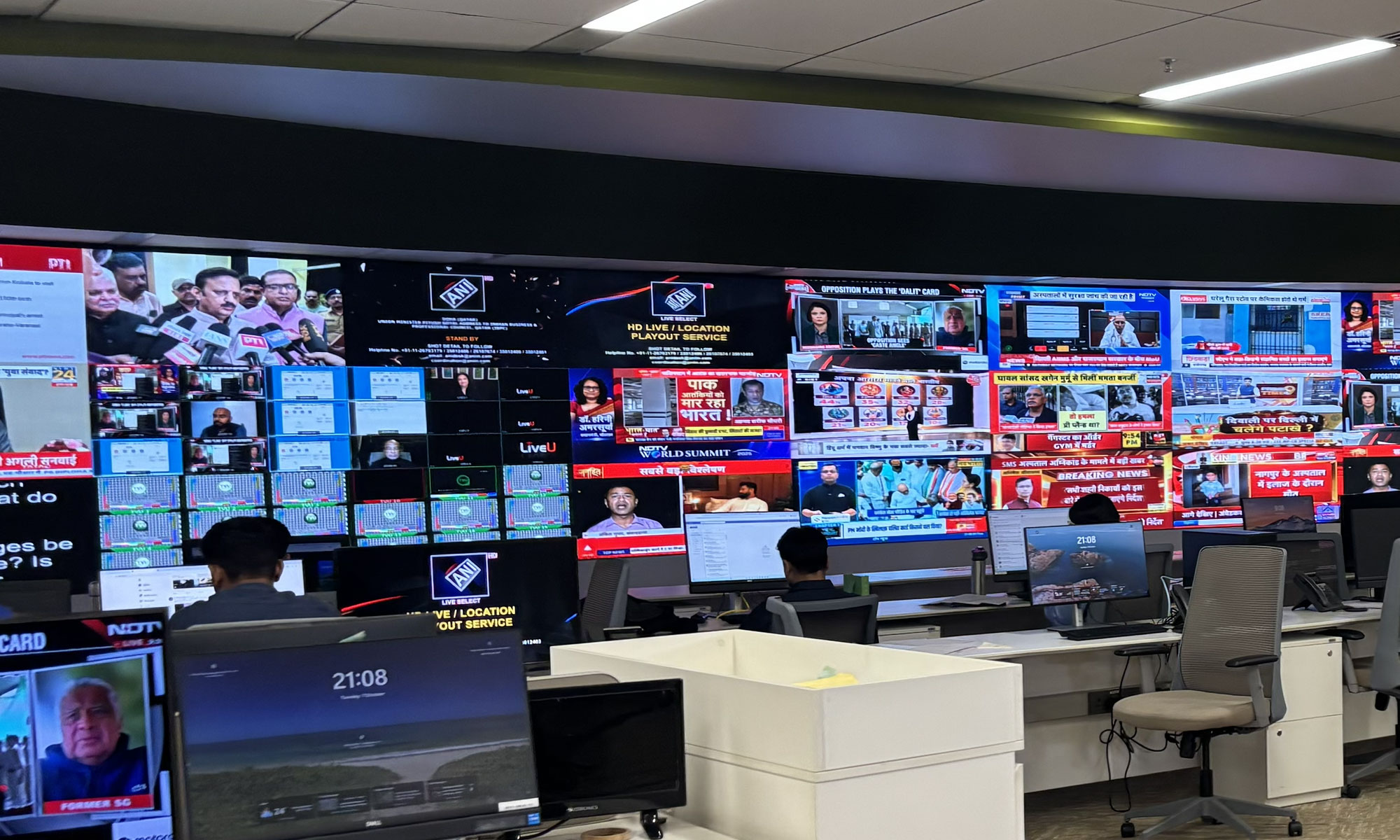
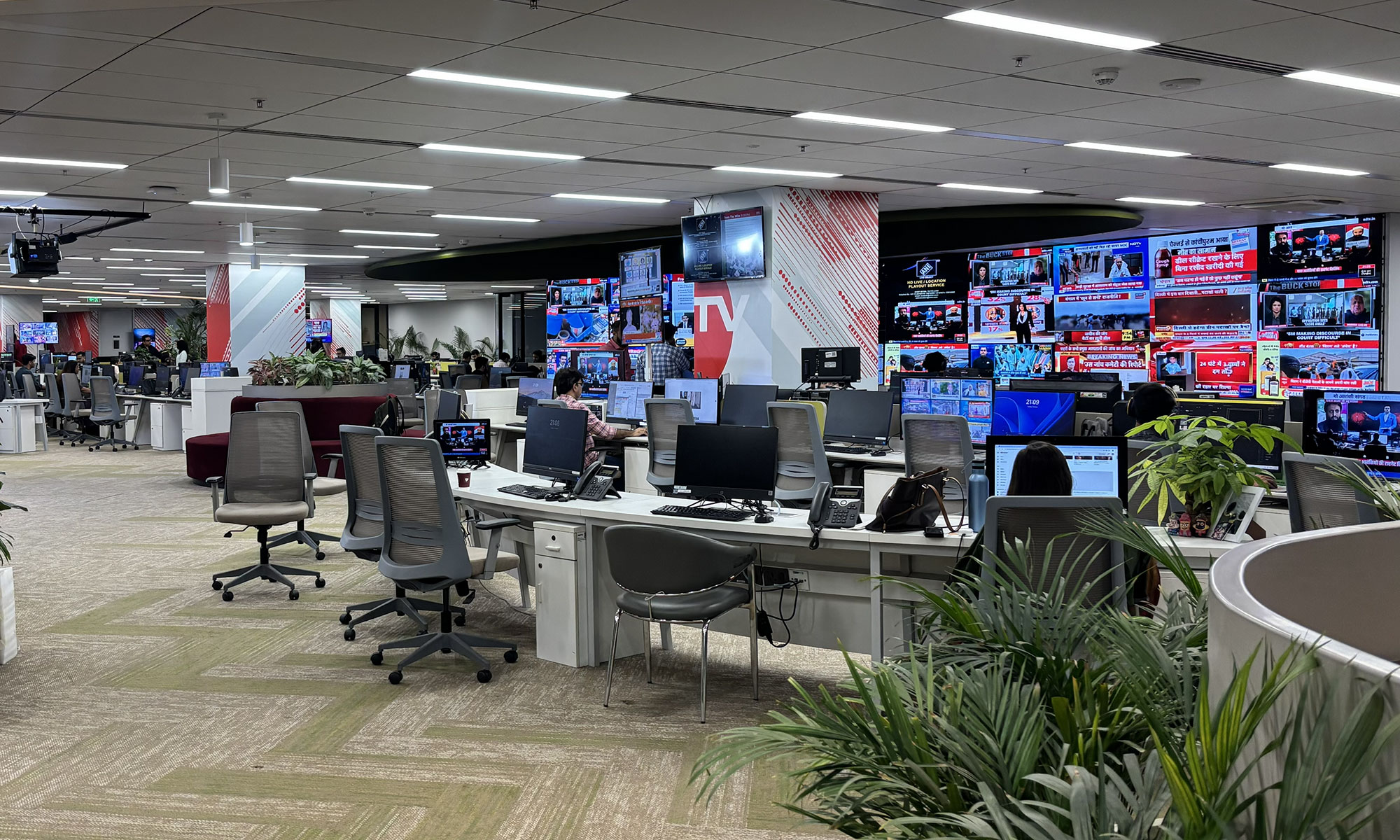
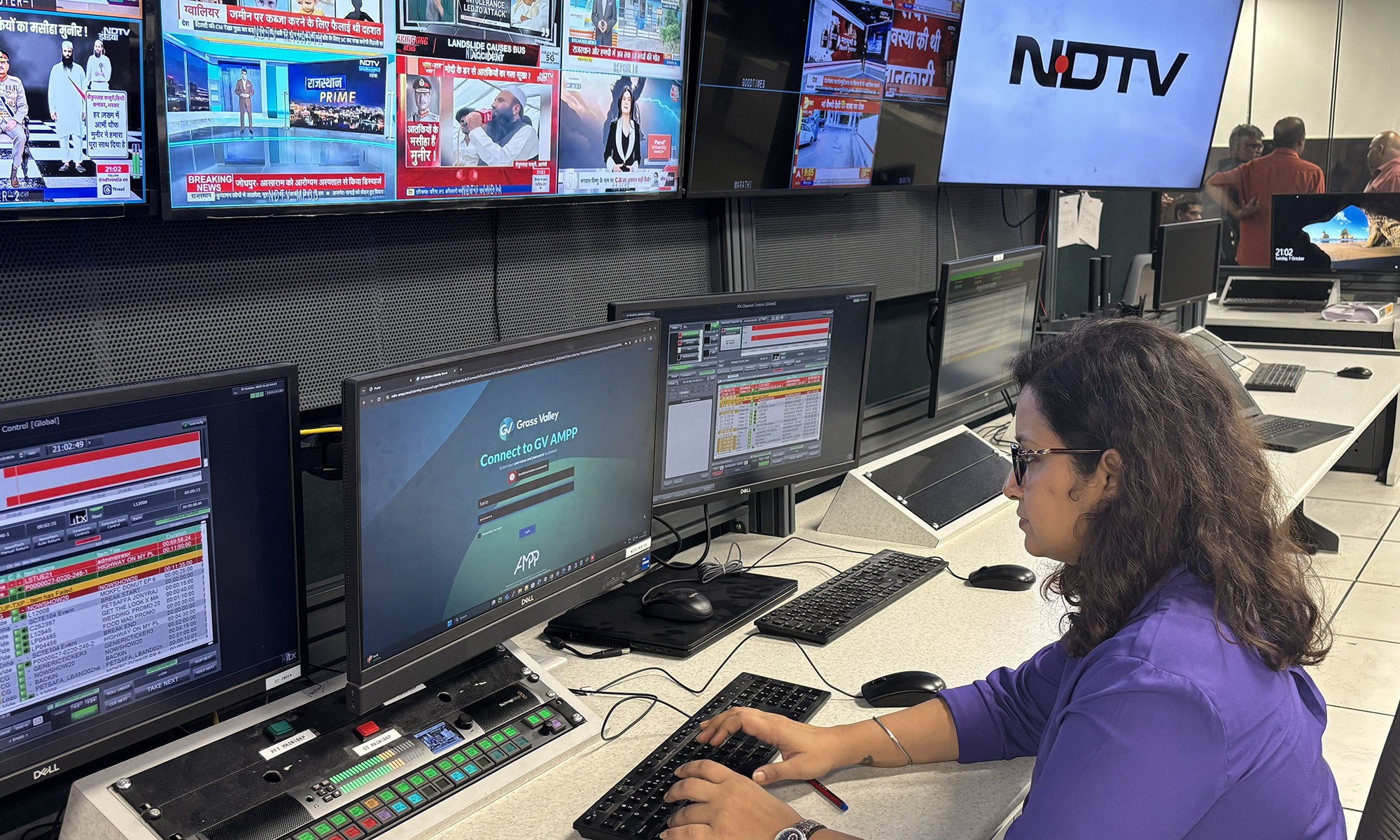
MONTREAL, CANADA – September 29, 2026 –Asian News International (ANI), one of South Asia’s longest-established multimedia news agencies, has deployed Grass Valley AMPP and Framelight X to modernize ingest, media management and content distribution across its news operations, creating a centrally managed environment for capturing live feeds and making content rapidly available to editorial and distribution teams.
Four on-premises processing nodes are connected to AMPP cloud orchestration, supporting 32 concurrent scheduled ingest resources across 28 SDI and four SRT channels. The Framelight X solution also brings monitoring, media management, clip playback, graphics and workflow automation into the same environment.
Founded in 1971, ANI operates more than 100 bureaus across India, South Asia and other international locations, supplying text, video and picture content to television networks, digital platforms, newspapers and more than 1,000 news organizations worldwide.
“ANI operates continuously across a fast-moving news environment, where incoming content must be recorded, verified and made available to our editorial and distribution teams without delay,” said Ishaan Prakash, Director at ANI.
“The Grass Valley AMPP and Framelight X platform gives us a centralized environment for scheduling, ingest monitoring, asset management and automated content delivery, helping us manage a high volume of news feeds while making content available faster for broadcast, digital and social media workflows.”
Managing High-Volume News Ingest
Grass Valley Elastic Recorder X and Scheduler give ANI centralized control of its 32 ingest resources, meaning operators can create and modify schedules, assign recorder resources, select sources and monitor recording status from a common interface. Each processing node handles seven SDI inputs and one SRT input, bringing facility and remote IP contribution into the same scheduling environment. Elastic Flow Monitor gives operators real-time visibility of source presence, signal health, recording status and storage usage. Dedicated Clip Player services handle preview, quality control, production and transmission, with GV HTML Graphics, Clean Cut and Image Store used for graphics, switching and fallback.
From Ingest to Distribution
Framelight X gives ANI browser-based access to media search, proxy preview, metadata inspection and content validation. Once a recording is complete, automated workflows transfer it into ANI’s central library and make it available for editing, archive and playout, including Adobe and EDIUS editing environments. Workflow Engine, Script Services and S3 Transfer handle highlight creation, MP4 processing, S3 delivery and social media preparation. During breaking news, ANI can record and monitor multiple live feeds while making captured material available for editorial review, clipping and distribution. Retention, proxy regeneration and asset deletion are also automated, reducing the manual handling required as media moves through the system.
Local Processing, Cloud Orchestration
Time-critical media processing remains on ANI’s four local nodes, with AMPP handling cloud-based orchestration and application management. Shared storage connects ingest, library, editing, archive, playout and transcoding, alongside ANI’s existing routing and monitoring infrastructure.
“ANI operates at a scale where speed, reliability and visibility across the content lifecycle are critical,” said Evan Boyd, Senior Vice President of Sales, APAC, Grass Valley. “This deployment combines AMPP cloud orchestration with local media processing to manage high-density ingest and automate the movement of content into editorial, broadcast and digital workflows. It gives ANI a scalable software-defined platform that can continue to develop with its news operations.”
ANI now has a common platform for scheduled ingest, monitoring, media management and multi-destination delivery, with the flexibility to add applications and workflows as its requirements change.
Grass Valley will be exhibiting at Broadcast India 2026 in Mumbai, October 22–24, at Booth D04, where visitors can learn more about AMPP, Framelight X and the company’s wider portfolio of production and content workflow solutions.
#####
About Grass Valley
Grass Valley empowers over 90% of the world’s top media brands to create and deliver compelling stories that captivate audiences. At the heart of its solutions is the GV Media Universe (GVMU), combining advanced hardware solutions, with the agility, elasticity, and adaptability of the AMPP Media Operating System. Together, they form a seamless, scalable ecosystem for efficient and innovative workflows.
With a portfolio spanning from camera to consumer, Grass Valley provides the flexibility to build solutions for every need – from a single creative harnessing immense production power to globally distributed teams collaborating seamlessly. This breadth of capability enables customers to craft efficient workflows that inspire and engage their audiences.
With over 65 years of expertise, Grass Valley has consistently driven the evolution of live content creation and storytelling. Headquartered in Montreal and supported by Black Dragon Capital, the company remains dedicated to shaping and leading the media revolution.
LNK Group Moves Five National Networks to Grass Valley AMPP
Lithuanian broadcaster deploys Playout X and Framelight X across five networks, combining on-premises software-defined playout with cloud-based disaster recovery as part of its SMPTE ST 2110 transition.
MONTREAL, CANADA– September 16, 2026 – LNK Group one of Lithuania’s leading commercial television groups has moved playout and media management for its five national television networks to Grass Valley’s AMPP Media Operating System, completing a project to introduce software-defined operations alongside its transition to SMPTE ST 2110.
The deployment covers LNK, BTV, TV1, InfoTV and 2TV, replacing LNK’s legacy playout environment with Playout X and Framelight X running on AMPP Local at its Vilnius facility.
Delivered by Hannu Pro, Grass Valley’s partner in the Baltic region and a certified AMPP Managed Service Partner, the project combines an on-premises primary system with cloud-based disaster recovery.
LNK selected the Grass Valley solution following a competitive tender as part of a wider upgrade of its broadcast infrastructure. The broadcaster required the reliability and operational resilience of national television playout, with greater flexibility to develop services and workflows.
“This project represents an important step in the modernization of LNK Group’s broadcast infrastructure,” said Ričardas Kazlauskas, CTO at LNK Group. “Our objective was to maintain the reliability required for national television broadcasting while giving us more flexibility in how we deploy and develop our services. Moving our five networks to AMPP and Playout X alongside our transition to SMPTE ST 2110 provides that foundation.”
Five Networks on AMPP LNK’s five networks combine scheduled programming, advertising, live content, news and graphics. Redundant Playout X chains provide continuity across all five, with support for live inputs, secondary recordings, HTML5 graphics, advanced audio and SCTE insertion for downstream advertising on LNK’s digital platform. LNK and BTV also support SRT contribution feeds.
AMPP allows applications to run on shared compute rather than dedicated broadcast hardware, giving LNK greater flexibility to introduce or modify workflows. The deployment operates alongside the broadcaster’s SMPTE ST 2110 infrastructure, connecting software-defined applications with its wider IP environment.
“One of the most important aspects of this transformation is that broadcast applications are no longer tightly coupled to dedicated hardware,” said Justinas Kunickas, CIO at LNK Group. “With AMPP we can run applications on shared compute infrastructure, integrate them with our existing systems and introduce or change workflows without rebuilding the underlying signal chain. For us, that architectural flexibility is one of the key benefits of moving toward a Dynamic Media Facility environment.”
Connecting Playout and Media Management Framelight X provides media management, logging, editing, record scheduling and content review, with high-resolution and proxy media held on central NAS storage. It also supports QC and preview of high-resolution content and connects LNK’s active workflows with an archive of approximately 150,000 assets.
Framelight X replaces the archive browsing and selection functionality previously used by traffic, scheduling and promo teams, providing access to content held within the existing Telestream DIVA archive. Hannu Pro integrated DIVA and Vantage with the new environment to meet LNK’s workflow requirements.
For LNK and BTV, disaster recovery is provided through a separate AMPP deployment on AWS, with Wasabi storage for high-resolution and proxy media.
Building on Existing Operations The project continues a technology relationship between LNK and Hannu Pro dating back to 1993. LNK’s wider production environment includes Grass Valley LDX cameras, K-Frame vision mixers and GV STRATUS, alongside Octopus NRCS for news production.
“LNK Group demonstrates how software-defined applications can be introduced into established broadcast operations while maintaining the resilience required for national television,” said Carlos Ferreira, VP of Sales, Southers Europe at Grass Valley. “AMPP gives LNK a common platform for playout and media management across five networks, with the flexibility to run applications on premises and extend critical services into the cloud. Combined with SMPTE ST 2110, it provides a practical route towards the Dynamic Media Facility.”
Kalvis Baumanis, CEO of Hannu Pro, added: “We would like to thank LNK’s management for the trust they have placed in Grass Valley and Hannu Pro while making the bold move into the AMPP Dynamic Media Facility world – among the first broadcasters in the Baltics. With AMPP, LNK’s technical team has hundreds of broadcast tools immediately at hand, covering practically any television production need. Where adding a new capability once meant months of ordering, installing and configuring dedicated equipment, it can now be deployed in minutes.”
####
About Grass Valley
Grass Valley empowers over 90% of the world’s top media brands to create and deliver compelling stories that captivate audiences. At the heart of its solutions is the GV Media Universe (GVMU), combining advanced hardware solutions, with the agility, elasticity, and adaptability of the AMPP Media Operating System. Together, they form a seamless, scalable ecosystem for efficient and innovative workflows.
With a portfolio spanning from camera to consumer, Grass Valley provides the flexibility to build solutions for every need – from a single creative harnessing immense production power to globally distributed teams collaborating seamlessly. This breadth of capability enables customers to craft efficient workflows that inspire and engage their audiences.
With over 65 years of expertise, Grass Valley has consistently driven the evolution of live content creation and storytelling. Headquartered in Montreal and supported by Black Dragon Capital, the company remains dedicated to shaping and leading the media revolution.
Grass Valley Launches AVORA at IBC2026, Bringing All-in-One Live Production to the Show
New standalone solution gives production teams everything they need to create, produce and deliver live content from one flexible system
MONTREAL, CANADA –September 10, 2026 – Grass Valley today announced AVORA, a new standalone, all-in-one live production solution that brings the tools needed to create and deliver sophisticated live shows together in one streamlined system.
Launching at IBC2026, AVORA gives production teams a complete environment to prepare, produce and deliver live content, from switching and graphics to audio, remote guests, content, replay and delivery. Instead of building a production around multiple separate tools, AVORA brings everything together around the show.
At the heart of AVORA is a simple idea: make professional live production easier to create, operate and repeat. Production resources can be prepared, saved, duplicated and recalled as a complete show, making it easy to move between recurring events, formats and productions without rebuilding the workflow each time. Teams can configure the production around the needs of each show and adapt it as those needs change.
“AVORA answers a very clear market need,” said Jonathan Lyth, Product Director for Live Applications at Grass Valley. “Production teams increasingly need professional capability, operational simplicity and the flexibility to scale around the show. AVORA brings the whole live production together in one system, giving teams a simpler way to create, operate and repeat sophisticated live productions.”
AVORA supports both visual, shot-based production and more traditional program/preset operation, allowing operators to work in the way that best suits the production. Its web-based user experience also enables multiple production roles to work with the same AVORA system from their own browser interfaces where required.
Remote guests can join productions through private invitation links, with low-latency connectivity, mix-minus and talkback built directly into the workflow. Content, graphics and prompting are integrated too, while replay, recording, monitoring, playout and delivery extend AVORA beyond production switching into a complete live production environment.
One system. One show. Everything you need.
AVORA is built on the founding principles and technology of GV AMPP, while operating as a standalone Grass Valley solution. It brings Grass Valley’s software-defined production experience into a self-contained all-in-one system, giving teams the flexibility to configure their production without the complexity of assembling and operating multiple independent tools.
AVORA is designed for a wide range of live productions, including sports, live events, venues, education, corporate and enterprise media, regional production and other repeatable workflows. The same system can be configured for different productions, formats and operating models.
For existing AMPP customers, AVORA also provides an additional option for productions where a standalone, all-in-one system is the right operational fit.
AVORA complements Grass Valley’s wider live production portfolio. K-Frame continues to serve dedicated hardware switching environments, while Maverik X and AMPP address software-defined production at enterprise scale. AVORA adds a standalone all-in-one model for productions where integrated capability, flexibility and simplicity are the priority.
AVORA will be showcased at IBC2026 on the Grass Valley booth, stand 9.A01, and in the IBC Future Tech Zone, stand 14.C49, ahead of commercial availability later this year.
#####
About Grass Valley
Grass Valley empowers over 90% of the world’s top media brands to create and deliver compelling stories that captivate audiences. At the heart of its solutions is the GV Media Universe (GVMU), combining advanced hardware solutions, with the agility, elasticity, and adaptability of the AMPP Media Operating System. Together, they form a seamless, scalable ecosystem for efficient and innovative workflows.
With a portfolio spanning from camera to consumer, Grass Valley provides the flexibility to build solutions for every need – from a single creative harnessing immense production power to globally distributed teams collaborating seamlessly. This breadth of capability enables customers to craft efficient workflows that inspire and engage their audiences.
With over 65 years of expertise, Grass Valley has consistently driven the evolution of live content creation and storytelling. Headquartered in Montreal and supported by Black Dragon Capital, the company remains dedicated to shaping and leading the media revolution.
Grass Valley Advances Story-Centric Media Workflows for Unified Media Operations at IBC2026
MONTREAL, CANADA – September 7, 2026 – Visitors to Grass Valley’s booth at IBC2026 will be introduced to new Framelight X capabilities that connect content acquisition, management, editing and publishing within a unified workflow for news and sports production.
Framelight X provides a browser-based environment where teams can acquire, discover, enrich, edit, review and publish content without creating unnecessary media copies or moving between separate systems. As part of Grass Valley’s Unified Media Operations strategy, the platform extends Dynamic Media Facility principles across the content lifecycle, connecting people, applications and media across locations.
“Every delay between acquisition, discovery and editing reduces the value of the content,” said Chris Partington, Product Director for Content and Editing at Grass Valley. “Framelight X brings those stages together so news and sports teams can start working with media as it arrives, collaborate across locations and get the story in front of the audience faster.”
From the Field to Every Audience
The new iOS FLX Reporter app extends Framelight X into the field, allowing journalists and production teams to capture and contribute news and live-event content from a mobile device. Media is transferred into Framelight X as it is captured through an integrated camera-to-cloud workflow, making it available to newsroom teams while the reporter remains on location.
The Framelight X Web Editor allows journalists, producers and editors to work with the same managed media directly in the browser. Multilayer editing, digital effects, branded graphics and multi-aspect-ratio production support delivery across linear television, websites, apps and vertical social platforms. Automated portrait tracking and resizing help adapt landscape footage for vertical formats.
For advanced craft editing, Framelight X integrates with EDIUS and Adobe Premiere Pro, keeping specialist NLE workflows connected to the same managed content and approval process. Integration with the Digital Joy Newsroom NRCS joins existing support for SAGA, Avid iNEWS and ENPS, connecting Framelight X media with newsroom planning and editorial workflows.
Finding and Publishing the Moment
For sports production, new continuous record trains allow live feeds to be recorded as growing media, giving editors access before the recording or event has finished. Highlights, packages and supporting content can therefore be created while the action is still taking place.
Integration with OPTA sports data adds event and player information, while automated speech logging makes spoken content searchable. New Smart Search adds AI-based semantic tagging and search, allowing users to locate media according to the meaning and context of a scene rather than relying solely on filenames, manually entered metadata or timecode.
AI-assisted tracking, blurring and point-of-interest tools reduce repetitive preparation work. Objects and areas of interest can be followed through a shot, while blurring can be applied to identities, screens, commercial marks or other visual elements where required.
Collaboration Across Locations
New browser-based collaboration capabilities allow producers and editors to work together from different locations. A remote over-the-shoulder workflow lets producers see and hear an editing session without dedicated remote-viewing infrastructure, while browser-based commentary and voiceover workflows allow contributors to add audio remotely.
Share links extend review and approval to external participants without requiring full system access. Editors, producers, reviewers and contributors can therefore work around the same managed content without transferring media between locations.
Framelight X’s federated architecture also provides access to content held across existing storage environments through a common library. Media can remain in place while teams search, audit and work with it across production sites and hybrid storage, reducing unnecessary duplication and retaining existing storage investments.
Native rendering and integration with Telestream Vantage and other workflow technologies extend this approach into processing and delivery, allowing actions to be coordinated through Framelight X as content moves towards publication.
Extending Open Media Workflows
IBC2026 will also see Grass Valley preview TAMS Store support within Framelight X, enabling time-addressable media to be discovered, recorded, managed and played as part of the wider workflow.
TAMS provides an open interoperability model that allows applications to work with the same underlying time-based media without creating a new file or proprietary handoff at each stage. Framelight X adds media management, metadata and user access, presenting TAMS-based content through the same tools used for search, editing, review and publishing.
“TAMS creates an important open foundation for media interoperability, but interoperability only delivers value when content is easy for production teams to access and use,” said Regis Andre, VP Engineering at Grass Valley. “Framelight X provides the management, discovery and workflow layer around TAMS, allowing users and applications to contribute, find and work with media without creating another isolated system.”
The integration extends the role of Framelight X within Grass Valley’s Dynamic Media Facility approach, connecting live and growing media with content management, editing and downstream workflows while retaining an open path between applications and storage.
Visitors can experience Framelight X and Grass Valley’s story-centric content workflows at Booth 9.A01 during IBC2026, September 11-14, at RAI Amsterdam.
#####
About Grass Valley
Grass Valley empowers over 90% of the world’s top media brands to create and deliver compelling stories that captivate audiences. At the heart of its solutions is the GV Media Universe (GVMU), combining advanced hardware solutions, with the agility, elasticity, and adaptability of the AMPP Media Operating System. Together, they form a seamless, scalable ecosystem for efficient and innovative workflows.
With a portfolio spanning from camera to consumer, Grass Valley provides the flexibility to build solutions for every need – from a single creative harnessing immense production power to globally distributed teams collaborating seamlessly. This breadth of capability enables customers to craft efficient workflows that inspire and engage their audiences.
With over 65 years of expertise, Grass Valley has consistently driven the evolution of live content creation and storytelling. Headquartered in Montreal and supported by Black Dragon Capital, the company remains dedicated to shaping and leading the media revolution.
IBC2026: What to expect from Grass Valley in Broadcast AV
September’s here, which in our industry means one thing: IBC – and those three letters are now emblazoned on about 80% of every message or email I send or receive.
But in all seriousness, next weekend promises to be a fantastic event in Amsterdam. We’ll be kicking things off with GV Forum on Thursday evening (6-8pm, Rosarium Amstelpark), before the doors open at the RAI and the conversations and demos move to the Grass Valley stand (9.A01). I’m looking forward to talking about what smaller enterprise teams can now do with production technology that used to rely on far bigger crews – a change that is becoming harder to ignore as the amount of enterprise video keeps growing.
We’re seeing financial institutions produce regular leadership communications alongside investor events, while global brands are running internal video alongside major launches and live events. When production becomes that frequent, the workflow has to hold up. A complicated setup that needs specialist intervention might be manageable for a larger annual event, but it makes a lot less sense when the same team needs to go live again a few days later.
For me, that’s where the idea of one-operator production becomes a lot more interesting. I wrote recently about what I call “the last 20 percent” – the work involved in taking a capable production platform and making it fit the organization that will actually use it. That thinking runs through a lot of what we’ll be showing at IBC; making workflows easier to return to and easier to scale when the job changes.
How Grass Valley is making production repeatable
One of the main Broadcast AV demonstrations we’ll be showing at IBC2026 is Event Producer X. Put simply, it is built for repeatability. It gives one operator a simpler environment for running the core production without needing to build a traditional control room around every event. Enterprise teams need to know they can come back to the same workflow for a town hall or leadership briefing – and just get on with it. If an event grows, the production environment should grow with it without forcing the team to start all over again.
We’ll also be showing Zoom ISOcloud in AMPP, bringing remote participants into the production as individual sources. For the operator, that means an executive joining from another office can become part of the same production environment rather than creating another workflow to manage alongside it. It sounds like a relatively small distinction on paper, but during a live event, removing those extra handoffs can make a real difference.
Thinking about the whole production
Contrary to how my diary currently looks for next week, there is a world beyond live events and it’s another consideration for enterprise production teams too. Most organizations have already invested time in bringing people together for an event, and there’s usually far more value in that content than the hour it happened to be live. A longer leadership session might become a 20 minute internal update, while a product event could feed regional marketing activity. The shelf life of the media can go well beyond the original production.
Framelight X is designed to connect that part of the workflow more directly to the live event, which means media can be managed centrally and edited in the browser. That allows teams to work with the material without extra rounds of file transfers or separate tools. I think that’s an important part of enterprise production now. The live event is one stage in a much longer content lifecycle, and that’s probably not a bad rule for trade show success either.
The same joined-up thinking applies at the other end of the workflow too: how the content is captured in the first place. Enterprise environments often need a mix of camera types. While a PTZ camera may make sense in a permanent meeting space, an LDX camera might be better for a higher-end studio or event production. Bringing those into the same production fabric gives teams more freedom to choose what fits the task in front of them.
See you in Amsterdam at #9.A01
The enterprise production space has reached a point where one person can take on far more of the workflow than would have been realistic even a few years ago. And when the job gets bigger, the technology underneath can now scale with it.
My message to IBC attendees – never underestimate what one operator can now produce! If you’re at IBC2026, come and find me and the Grass Valley team in Hall 9, stand 9.A01, and let’s talk about where smaller production teams can go next.
For broadcasters, the value of a content archive depends as much on the metadata attached to each asset as the media itself. Journalists and producers rely on that information to search, identify, and reuse content quickly across fast-moving news workflows.
When NDTV set out to modernize its media asset management environment, preserving years of accumulated content and metadata became a key priority. Working with Grass Valley, the broadcaster migrated production and archive content from its existing GV STRATUS environment to the AMPP-powered Framelight X platform while maintaining uninterrupted newsroom operations.
NDTV needed to migrate high-resolution production and archive content from its existing media asset management environment without disrupting day-to-day news production
Alongside the media itself, the broadcaster also needed to preserve the metadata that underpins editorial search, identification, and content reuse
The project required a carefully managed transition that would maintain continuous access for journalists and production teams while creating a more flexible platform capable of supporting future broadcast and digital workflows.
Preserving metadata integrity
We now have a modern MAM environment that supports our current workflows while giving us the flexibility to build on it as our operational requirements continue to evolve.
Dinesh Singh, Chief Technology Officer, NDTV
Solution
Grass Valley migrated NDTV's media assets and metadata from GV STRATUS to the AMPP-powered Framelight X platform using automated workflows, including STRATUS Rules for content export and proxy generation
The system connects ingest, asset management, replay, post-production and playout within a single environment, supported by a microservices architecture that allows components to be updated independently.
Framelight X provides a unified media asset management environment where content and metadata are managed together, allowing editorial teams to search, review, and prepare material through a single interface
Proxy workflows enable users to work efficiently with content while high-resolution media remains securely managed within the platform.
End Result
NDTV now operates from a centralized content management environment that preserves access to both production and archive material while improving collaboration across editorial and production teams. The successful migration maintained workflow continuity throughout the transition and provides a scalable foundation for future workflow automation, archive management, and content production as operational requirements continue to evolve.
Founded in 1988, NDTV is one of India’s leading news broadcasters, delivering television and digital news services to audiences across India and international markets. The company operates multiple news platforms supporting fast-paced editorial workflows, where rapid access to media assets and metadata is essential for daily news production. Through its long-standing partnership with Grass Valley, NDTV continues to invest in modern, scalable production technologies that support both current operations and future workflow development.
Grass Valley Enables Sky News Australia’s Cloud-First Newsroom Transformation with AMPP
Browser-based editing, remote production, and scalable playout power 24/7 multi-platform news delivery
MONTREAL, CANADA – June 2, 2026 –Grass Valley today announced that Australian News Channel (ANC), operator of Sky News Australia, has deployed Grass Valley AMPP to transform its newsroom production operations as part of the relocation of its national headquarters.
The transition replaces a long-standing legacy system with a cloud-based production architecture, enabling more than 250 journalists, editors, and producers to collaborate through browser-based workflows. The platform now supports the delivery of over 1,500 hours of content each week across broadcast and digital platforms.
“This transformation has fundamentally changed how we operate as a newsroom,” said Jesse Hicks, Deputy Head of Operations and Innovation, Sky News Australia. “Our teams can access editing tools from anywhere, collaborate in real time, and turn around content faster without compromising quality. It gives us the flexibility needed for modern news production while maintaining the reliability required for a 24/7 environment.”
ANC deployed the AMPP ecosystem, as part of a relocation project replacing an SQ based news production system from Grass Valley’s Quantel lineage. The solution includes Framelight X for browser-based editing, Playout X for cloud playout, and integrated asset management, ingest, and storage services. Journalists can now create and edit content directly in a web browser, removing reliance on physical workstations and accelerating production workflows.
The new workflow supports fully distributed production, enabling teams to work across the newsroom, field locations, and remote environments. By streamlining processes and reducing manual tasks, ANC has improved efficiency and redirected time toward content creation.
“Undertaking a full newsroom transformation alongside a headquarters relocation is a complex challenge,” said Jon Wilson, CEO, Grass Valley. “ANC took a clear, strategic approach – moving to an integrated software defined model that delivers greater flexibility, scalability, and resilience across its operations. This project reflects our long-standing partnership and a shared commitment to modernizing news operations live production.”
Since going live in November 2025, the platform has delivered continuous 24/7 operation without downtime, demonstrating the reliability of cloud-based production at scale. As an early adopter of AMPP for newsroom workflows, ANC continues to work closely with Grass Valley, providing operational feedback that informs ongoing platform development.
#####
About Grass Valley
Grass Valley empowers over 90% of the world’s top media brands to create and deliver compelling stories that captivate audiences. At the heart of its solutions is the GV Media Universe (GVMU), combining advanced hardware solutions, with the agility, elasticity, and adaptability of the AMPP Media Operating System. Together, they form a seamless, scalable ecosystem for efficient and innovative workflows.
With a portfolio spanning from camera to consumer, Grass Valley provides the flexibility to build solutions for every need – from a single creative harnessing immense production power to globally distributed teams collaborating seamlessly. This breadth of capability enables customers to craft efficient workflows that inspire and engage their audiences.
With over 65 years of expertise, Grass Valley has consistently driven the evolution of live content creation and storytelling. Headquartered in Montreal and supported by Black Dragon Capital, the company remains dedicated to shaping and leading the media revolution.
Warner Bros. Discovery’s coverage of the Olympic Winter Games Milano Cortina 2026 formed part of a broader transition towards a unified production platform designed to support both large-scale live events and continuous sports output.
Built on Grass Valley’s AMPP and underpinned by Framelight X and Playout X, the platform connects editorial, engineering and operations teams across multiple locations. It provides a shared production environment capable of scaling to meet the demands of Olympic coverage while continuing to support Eurosport and TNT Sports programming. The approach reflects an ongoing shift towards software-defined, distributed production workflows across Warner Bros. Discovery’s sports operations.
The Winter Olympics takes place alongside a full international sports calendar, requiring Warner Bros. Discovery to manage Olympic coverage while maintaining its regular output.
This increases pressure on ingest, content management and playout workflows, particularly when handling hundreds of live feeds, multiple editorial teams and frequent schedule changes due to weather delays
Previous workflows, built around individual events or locations, introduced operational complexity and duplication.
The challenge was to create a single production environment capable of scaling to Olympic-level demand while remaining flexible enough to support day-to-day sports production, without requiring separate infrastructure builds or disrupting live operations during system updates or expansion.
600+ Daily Users at Peak
During the Milano Cortina Games we saw an average of more than 600 users per day across Europe and the US and around 680 concurrent users working on the platform at peak.
Warner Bros. Discovery deployed a unified platform based on Grass Valley AMPP, with Framelight X acting as the workflow engine and Playout X managing channel delivery.
The system connects ingest, asset management, replay, post-production and playout within a single environment, supported by a microservices architecture that allows components to be updated independently.
Ingest workflows were modernized through a migration to MXF and Elastic Record X, enabling scalable recording across distributed infrastructure.
Custom interfaces within Playout X, including a dedicated Sports UI, were developed to support live operations, while Framelight X improvements enhanced content search and accessibility across multiple teams and locations.
End Result
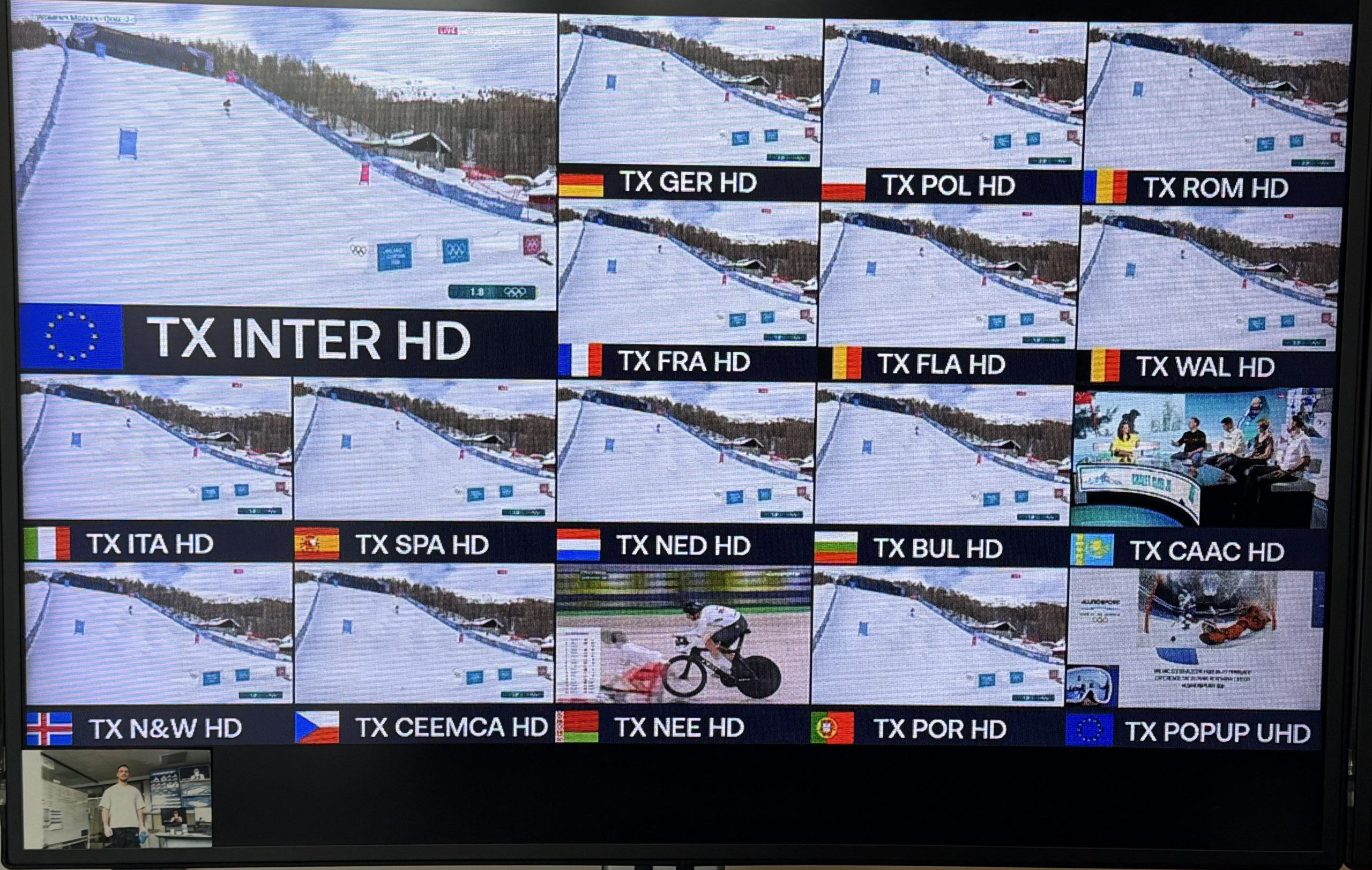
During Milano Cortina, the platform supported more than 600 daily users, peaking at around 650 concurrent users across Europe and the US. It handled over 62,000 hours of recorded content and more than 4,000 recording tasks in a single day, while delivering 42 linear channels in 22 languages alongside more than 100 digital channels. Content was accessible across workflows during ingest, reducing delays between capture and publication. The platform enabled the launch of additional pop-up channels and supported distributed production across Paris and London, maintaining operational continuity while allowing teams to scale output efficiently across both Olympic and regular sports coverage.
Warner Bros. Discovery is a global media and entertainment company operating a portfolio of television networks, streaming services and production businesses. Its sports division delivers live coverage across major international events, including the Olympic Games, alongside year-round programming through brands such as Eurosport and TNT Sports. The company continues to invest in software-defined and distributed production models to support evolving audience demands and operational requirements. By standardizing workflows across a unified platform, Warner Bros. Discovery is developing a scalable production environment capable of supporting both large-scale live events and continuous content delivery across multiple markets and platforms.
Building a Platform for Olympic-Scale Sports Production
Delivering Olympic coverage across Europe requires production teams to manage hundreds of feeds, multiple editorial teams and simultaneous live events. For Warner Bros. Discovery, the Olympic Winter Games Milano Cortina 2026 provided another opportunity to operate and refine a production platform, driven by Grass Valley’s AMPP using Framelight X and Playout X, designed to support that scale.
Milano Cortina was my seventh Olympics working with Eurosport and Warner Bros. Discovery. Each Games brings different operational challenges, but this one highlighted how much our production infrastructure has evolved in recent years.
Over several Olympic cycles we have moved towards a shared production platform connecting editorial teams, operators and engineers across our operations. The aim has been to support both major live events and day-to-day sports production through the same infrastructure.
Earlier Olympic workflows were organised differently. Production environments were often built around individual events or teams, which meant systems and capacity were spread across multiple locations. Over time, we moved towards a unified platform – built on Grass Valley’s AMPP and underpinned by Framelight X and Playout X – that was capable of supporting Olympic coverage alongside our regular sports output, as well as adding capacity for new channels and capabilities.
Today, through Grass Valley’s Framelight X, teams can access the same production environment from multiple locations. During the Milano Cortina Games we saw around 650 concurrent users working on the platform at peak, with an average of more than 600 users per day across Europe and the US.
Supporting that level of collaboration requires infrastructure that can evolve without interrupting live production. The core platform powered by Grass Valley’s AMPP operates on a microservices architecture, with the Framelight X workflow engine connecting ingest, content management, central LiveTouch replay management, playout (Playout X) as well as post production. This allowed engineers to update individual components without affecting the wider system.
In the past, system upgrades were often lengthy processes requiring updates to each individual user’s computer, but changes can now be introduced gradually while production continues. With the GV team, we reconfigured the core AMPP platform through software-defined production for the event instead of rebuilding it as a one-off workflow. This also changed how we introduced new services, by extending existing resources rather than deploying new infrastructure.
During Milano Cortina, this approach supported the launch of additional pop-up channels alongside our core services.
Central to all of this was the Framelight X story-centric, continuous media production environment, which is specifically designed for high-demand and distributed operations like ours. Framelight X federated all of our content into a single system, giving us streamlined access to everything we needed – from ingest through to editing and publishing – from any location.
Scaling ingest and managing content
One of our priorities ahead of Milano Cortina was ensuring the platform could handle the volume of content we expected to record. Unlike a summer Olympics where most other major competitions are no longer running, the Winter Games sit right in the middle of an extremely busy global sports calendar. So in addition to our Winter Olympics coverage, we were also delivering our regular sports output across Eurosport and TNT Sports, which meant managing multiple events simultaneously. That complexity is added to by the Winter Games being more susceptible to weather delays and last minute rescheduling, as we experienced this year with events being postponed by snow delays.
Across the Games, the platform handled more than 62,000 hours of recorded content, with peaks of over 4,000 recording tasks in a single day.
Working with Grass Valley, we completed a migration project that modernised our ingest workflow and expanded recording capacity, moving us away from legacy GV I/O recording workflows using CMF formats and towards an architecture based on MXF and Elastic Record X.
With this model, the ingest layer remains local while the resources required to run the recording services and connect to Framelight X can scale through distributed infrastructure. At the same time, the platform operates as a single production environment, with media asset management, playout, production tools and post-production capabilities all connected to the same core storage. Content doesn’t need to be moved between systems, and is accessible from any tool, even during ingest, across 22 supported languages.
This simplifies operations and support, while ensuring content is immediately available to editorial teams. It also reduces duplication across systems and helps teams deliver more content, more efficiently. This allowed us to add 80 additional recording ports to cope with the recording peaks during the Games.
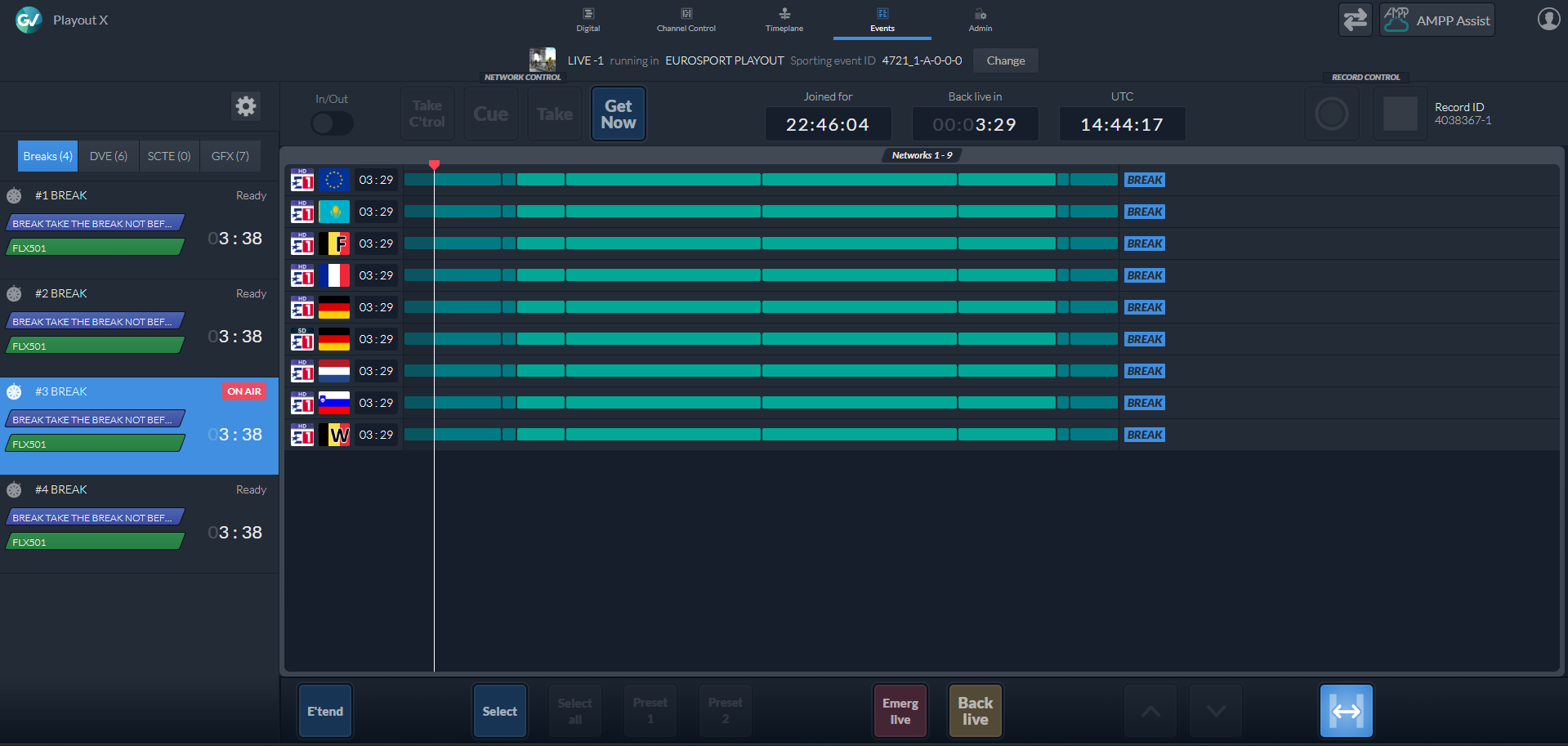
Alongside ingest, we also identified specific requirements around playout and commercial break handling. Working with Grass Valley, we developed dedicated user interfaces within Playout X to support live operations and simplify how commercial breaks are managed. One of these is the Sports UI, which allows operators in the PCR gallery to manage commercial breaks directly during live production, without needing to be connected to the central playout system. This gives production teams more flexibility during live events while allowing central teams to remain focused on international and master playlists.
We also extended our approach to regionalization. Alongside a primary international feed, we operate multiple regional channels that can either follow the main feed and replace breaks with local content, or opt out entirely to deliver rights-specific programming. This allows us to maintain a single master playlist while supporting multiple localised outputs in a more efficient and scalable way.
At the same time we reviewed how operators interacted with the platform itself. Following the Paris 2024 Games, feedback from users highlighted the difficulty of locating specific clips within large volumes of recorded content.
When hundreds of feeds are recorded simultaneously, search and discovery become critical parts of the workflow. Together with Grass Valley we focused on improving Framelight X’s search capabilities and metadata handling within the system, and during Milano Cortina the difference was noticeable. Operators were able to locate relevant material much faster, which helped editorial teams publish content more efficiently across both digital and linear platforms.
Resilience and distributed production
Operational resilience is another essential requirement for large-scale live production. For the Winter Games, Paris and London served as our main operations centres for Olympic coverage. The system is designed so that either location can assume control if required; for instance, if an operational issue occurred in Paris, our teams in London could immediately manage recording operations through the same scheduling interface. And vice versa.
Rather than relying on disaster recovery processes that activate only during emergencies, the platform operates in a balanced mode where redundancy is already built into day-to-day operations.
The same infrastructure also supports more distributed production models. Across the Games, we delivered 42 linear channels in 22 languages, alongside more than 100 digital channels, supporting over 4,000 live events across linear and digital platforms.
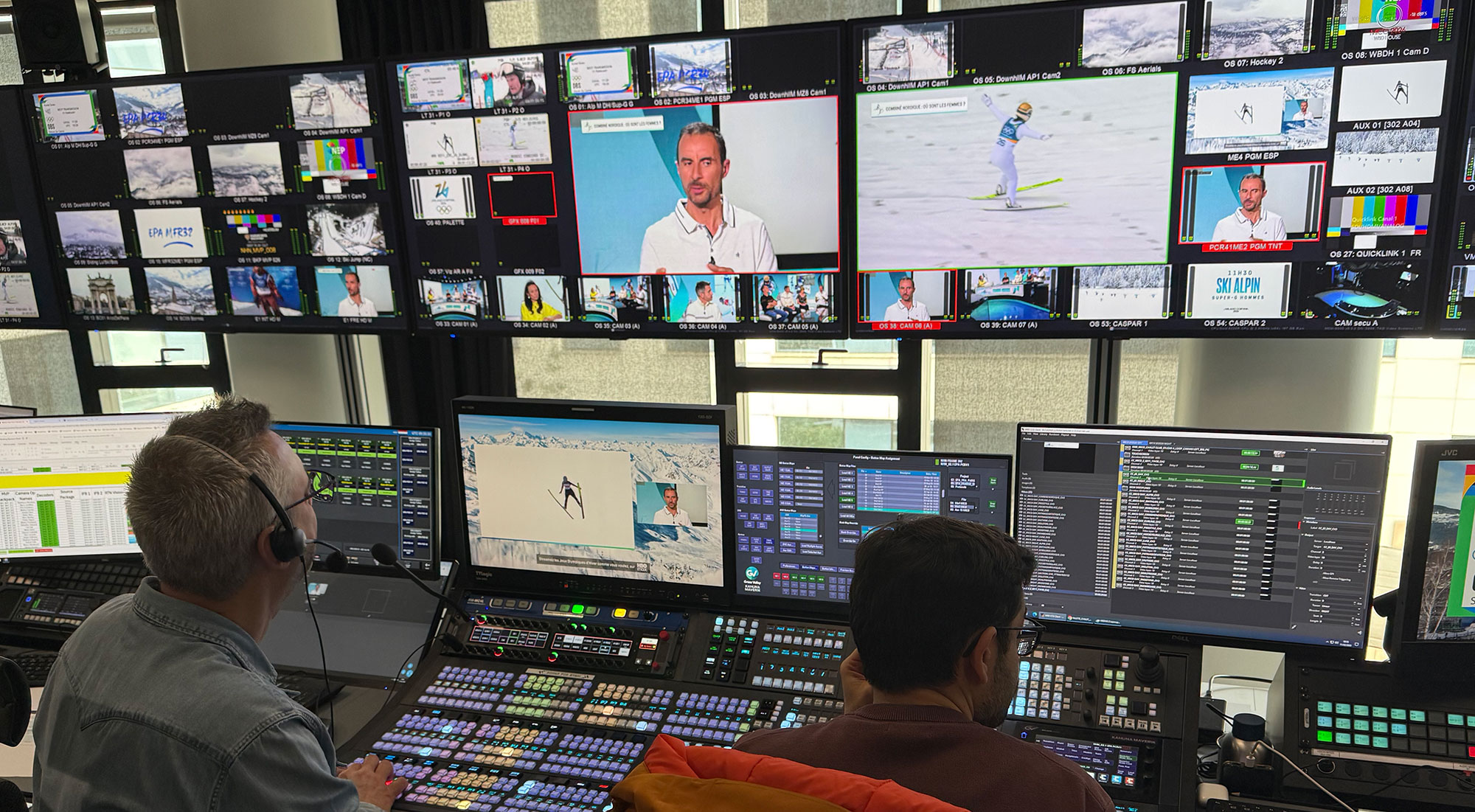
For some workflows it is no longer necessary to move large numbers of people or equipment to every event location. Infrastructure can remain in central data centres, cloud environments or any hybrid, while production teams connect remotely. For the Milano Cortina Games, I was based in Paris rather than being on site in Italy. From a production perspective this approach allows us to coordinate resources more efficiently across multiple events.
Collaboration and continuous improvement
Technology provides the framework for these workflows, but large productions ultimately depend on the teams operating them. Our engineering and operations groups are stationed in Paris, London, the US and across Europe with each region handling its own dedicated editorial requirements, and collaboration between those teams is essential during major events.
Engineers also need to think from the perspective of operators and editorial teams. A workflow that appears simple from a technical point of view may become inefficient if it needs to be repeated many times during a production day. Feedback from operators after each major event helps guide improvements ahead of the next production cycle.
Looking ahead, our focus now moves to upcoming productions such as [the French Open Tennis Championship at] Roland Garros, while we continue to evolve the platform itself. One area we are exploring is the increased use of 1080p HDR as a mezzanine format for production workflows. We are also building additional media platforms for other parts of the Warner Bros. Discovery portfolio, including free-to-air channels in Nordic markets.
Each event adds experience that feeds into the next stage of development, and the AMPP-powered platform – driven by the innovative capabilities of the Framelight X and Playout X systems – continues to evolve alongside the production requirements it supports.
Grass Valley Powers MediaHub Australia Transformation with Framelight X
MediaHub consolidates media logistics, ingest and asset management into a single, flexible solution to support over 400 channels globally
MONTREAL, CANADA – April 8, 2026 – Grass Valley today announced the successful deployment of its Framelight X content management, media logistics and workflow orchestration solution at MediaHub Australia, a leading multi-client media, playout, and distribution provider. Native to AMPP, Framelight X enables MediaHub to unify previously fragmented workflows into a single, highly configurable environment.
A long-standing Grass Valley partner, MediaHub has worked with the company since the launch of its facility. Today, it delivers more than 400 channels across Australia and international markets, supporting a wide range of broadcasters and content owners.
As part of its transformation strategy, MediaHub set out to replace multiple systems used for media logistics, ingest and asset management with a single integrated solution. The objective was to retain the efficiency of highly customized workflows while reducing complexity and enabling greater operational control.
Framelight X was selected for its scalability, hybrid deployment capabilities and ability to support self-service customization. The deployment includes core Framelight X capabilities, like Elastic Record for line ingest, scheduling tools, dashboards and a workflow engine that drives media logistics and automation across the operation.
“MediaHub operates in a highly dynamic environment where flexibility and efficiency are critical,” said Alan Sweeney, CEO of MediaHub Australia. “With Framelight X, we now have a single solution that allows us to design and adapt workflows to meet the specific needs of our customers, while dynamically optimizing how we use both on-prem and cloud infrastructure.”
A key differentiator in the selection process was the ability to enable MediaHub’s internal teams to build and modify workflows independently. Competing solutions would require significant long-term professional services to achieve similar outcomes, limiting flexibility and increasing cost.
“Framelight X gives us full control,” said Simon Scott, CDIO of MediaHub Australia. “We can now consolidate our media workflows into one technology stack and combine on-prem and cloud compute in a way that was not previously possible. It allows us to evolve our operations in line with how our business evolves.
The deployment, completed in approximately six months, was largely led by MediaHub’s internal team, with Grass Valley providing project management support and workflow consultancy. This approach allowed MediaHub to control timelines and adapt priorities based on customer demand.
The result is a modern, hybrid-capable solution that delivers both technical and commercial flexibility, supported by Grass Valley’s AMPP token-based model, enabling workloads to scale as needed.
“While Framelight X is widely recognized for its strength in fast-paced newsroom and sports operations, this project highlights its capability to function as a robust MAM and media logistics backbone, supporting more conventional broadcast workflows with the same level of efficiency and control.” said Tony Moran, Regional Sales Director at Grass Valley. “MediaHub’s implementation shows the value of giving customers direct control over workflow design, enabling them to scale and adapt as their business evolves.”
With Framelight X now at the center of its operations, MediaHub expects to continue evolving its workflows as the business grows, extending the solution’s role across new services and use cases.
#####
About Grass Valley
Grass Valley empowers over 90% of the world’s top media brands to create and deliver compelling stories that captivate audiences. At the heart of its solutions is the GV Media Universe (GVMU), combining advanced hardware solutions, with the agility, elasticity, and adaptability of the AMPP Media Operating System. Together, they form a seamless, scalable ecosystem for efficient and innovative workflows.
With a portfolio spanning from camera to consumer, Grass Valley provides the flexibility to build solutions for every need – from a single creative harnessing immense production power to globally distributed teams collaborating seamlessly. This breadth of capability enables customers to craft efficient workflows that inspire and engage their audiences. With over 65 years of expertise, Grass Valley has consistently driven the evolution of live content creation and storytelling. Headquartered in Montreal and supported by Black Dragon Capital, the company remains dedicated to shaping and leading the media revolution.