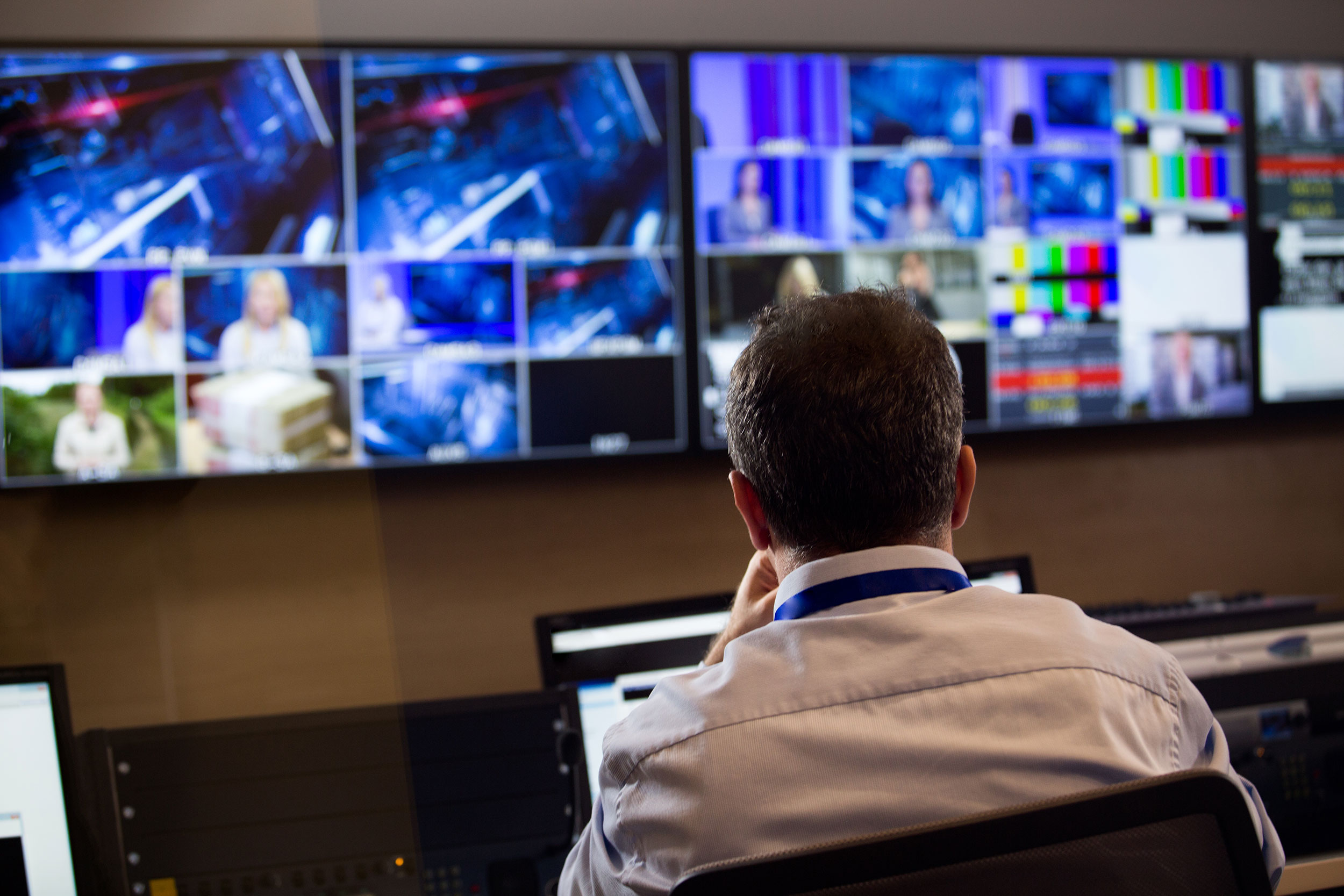


Playout X screen demo
Solutions

Playout

Reaching the audience is the work.

Content has never been more valuable. But value only exists when content actually reaches the audience.

Today’s viewers are everywhere. Linear channels, FAST platforms, OTT services, social feeds. Expectations are high and patience is low. Loyalty is fragile. If content is not available when and where it matters, attention is lost.

Playout is often seen as the final step in a production chain. In reality, it has become one of the most strategic parts of the entire operation. It determines how quickly organizations can respond, how flexibly they can adapt and how confidently they can meet audiences on their own terms.

What Playout Has Become

Playout has always been about controlled delivery. Scheduling content, ensuring continuity, maintaining quality and reliability.

What has changed is the context.

Channels are no longer static. They appear, evolve and sometimes disappear entirely. Events create temporary demand. Audiences fragment across platforms. Distribution strategies shift continuously.

In this environment, playout is no longer a fixed endpoint. It is an active, responsive layer that connects content, timing and audience reach.

When Distribution Becomes Dynamic

Models such as FAST and OTT have become a natural part of the media landscape.

FAST channels behave like linear television but live on IP platforms, supported by advertising and designed to scale rapidly. OTT services deliver content directly to audiences across devices, regions and formats, often combining on-demand and linear experiences.

Both share a common trait: they reward speed and adaptability. Channels need to be launched quickly, adjusted continuously and retired without friction when their role is fulfilled.

Playout that assumes permanence struggles here. Playout that is elastic thrives.

Technical concept Cloud image

The Shift to Cloud-Native Playout

Operations Aligned to Business Reality

Cloud-native playout is not a trend. It is a response to how media businesses operate today.
Demand changes fast. Revenue models evolve. Capacity must adapt in real time.
Broadcasters no longer need to forecast months ahead. Infrastructure scales with opportunity — not assumption.

One Model. Every Distribution Strategy.

Modern playout must support multiple outputs at once.
24/7 flagship channels. Pop-up event streams. FAST services. OTT. Traditional linear.
Cloud-native architecture enables all of them within a single operational framework. No duplication. No silos.

Built for Scale. Designed for Resilience.

Cloud-native playout is built from independently scalable services, orchestrated as one system.
Resources scale where needed. Performance remains consistent.
Resilience is embedded across availability zones and regions - ensuring continuity even when infrastructure is challenged.
This approach does not replace reliability with flexibility. It combines them.

AMPP Flow monitor

Playout X in the Real World

Software-Defined by Design

Playout X embodies a true cloud-native approach. It is fully software-defined and built to run wherever it delivers the most value, in public cloud, private cloud or hybrid environments. Cloud-native is not about location. It is about architecture. It defines how the system operates, scales and adapts - not where it resides.

Built on AMPP OS. Connected by Architecture.

Because Playout X is built on AMPP OS, it operates as part of a broader, software-defined production environment. Channels scale independently. Orchestration manages continuity. Deep integration with surrounding applications allows playout to respond immediately to changes upstream.

One Operational Model. Any Channel Strategy.

Playout X is used for continuous linear services, dynamic FAST offerings, OTT distribution and event-driven channels. The operational model remains consistent even as the business model changes.

Learn more about Playout X

Integration Without Handoffs

In modern operations, playout cannot be isolated.

Content preparation, metadata, rights management and timing all influence when and how channels go live. When these elements are disconnected, change becomes slow and error-prone.

Playout X operates within the same environment as the applications around it. Updates do not need to be handed off. They are reflected as part of the same operational context.

This allows organizations to respond to change without breaking flow.

Different Approaches, Different Outcomes

AspectTraditional PlayoutCloud-Native Playout X
Channel lifecycleFixed and permanentDynamic and adaptable
Time to launchExtended preparationRapid activation
ScalabilityPre-allocatedElastic
Event-driven channelsOperationally heavyNative
ResilienceHardware-centricZone and region-aware
IntegrationFile-based handoffsShared operational context
Cost behaviorFixed upfrontAligned with use

These differences are not abstract. They directly affect how quickly organizations can act and how safely they can evolve.

Operating With Confidence

Playout X is already in use across diverse operational realities. Permanent channels, temporary services, regional distribution strategies and large-scale events all rely on the same underlying approach.

What this demonstrates is not novelty, but maturity. Cloud-native playout has moved from experimentation to operational backbone.

Moving Forward

Playout X sits within a broader ecosystem designed to support modern media operations end to end. It does not dictate how organizations should work. It adapts to how they already do.

Whether the goal is to expand reach, increase resilience, support new distribution models or respond faster to audience behavior, playout becomes an enabler rather than a constraint.

The question is no longer whether distribution will change. It is whether the operation is ready to change with it.

Together, we continue Leading the Media Revolution.

Contact Sales Today