

Why a Unified Media Operation Matters
In this series, we explore the technologies, architectures and operational realities shaping modern media operations. Along the way, we examine how these individual pieces contribute to a larger operational picture and ultimately help organizations build a unified media operation.
In our previous article, we explored why AI and operational intelligence matter as media operations become more dynamic. AI can reduce noise, surface meaning and help people act with greater confidence. But intelligence only creates value when it is connected to the operation it is meant to support.
That brings us to a more grounded question. If Dynamic Media Facilities provide adaptability, MXL preserves freedom, trust enables participation, confidence creates readiness and AI strengthens agency, what happens when all those possibilities meet the reality of the operation already producing content today?
The sixth paradox: the more you need to change, the more your existing operation matters.
The media industry often talks about transformation as if change starts from a blank page. A new architecture. A new operating model. A new software-defined environment. A new way to produce, distribute, connect and collaborate.
There is value in that ambition. Without it, media production would not move forward. Dynamic Media Facilities have shown how production environments can become more adaptable. MXL has shown how media exchange can become more open. Software-defined production has shown how workflows can become more flexible. AI has shown how operational intelligence can help people find meaning in complexity.
But deployment rarely begins with a blank page. Media organizations begin from environments that already carry the business: facilities, teams, workflows, infrastructure, customer commitments and years of operational knowledge. That is not baggage, it is the foundation that makes progress practical.
The Real Challenge is Deployment Reality
The industry naturally focuses on what is new. That is understandable. New technologies create energy, attract attention and make it possible to imagine a different way of working. But what is new is rarely the only thing that matters.
Every operating model creates value differently. Dedicated hardware can be the right answer for continuous performance and predictable efficiency. Software-defined workflows can be the right answer for elasticity, collaboration and rapid adaptation. Cloud resources and partner technologies can add value where specific needs demand them.
The real challenge is not choosing which model wins. The real challenge is understanding where each model creates the most value inside the operation.
That is where the conversation needs to mature. Media organizations are not trying to win an architecture debate. They are trying to serve audiences, protect quality, control cost, support creative teams and remain ready for changing production demands.
Progress is not measured by how much of the operation becomes software-defined. It is measured by how well each capability supports the creative, operational and financial reality of the business.
That changes the question. The question is no longer: how quickly can we move away from what we have? The question becomes: how do we build on the value we already have while gaining the flexibility to evolve?
Enter a Unified Media Operation
This is where unified media operations become useful as a direction. A unified media operation describes an intended direction rather than a product category: hardware-based systems, software defined workflows, cloud resources, partner technologies and existing infrastructure working together as one production environment. It gives media organizations the freedom to combine the ingredients that best fit their operation, their customers and their business.
A unified media operation is not a replacement for a DMF. It is the wider operational reality in which DMF becomes part of a customer’s broader production environment.
Here is where the ideas explored throughout this series stop being separate concepts and become one operating reality. Adaptability, freedom, trust, confidence and intelligence only matter when people can apply them inside the same environment they use to create, protect and deliver content every day.
A Dynamic Media Facility provides an important architectural direction for software-defined production. But real-world media operations rarely become only one thing. They remain physical and virtual, dedicated and elastic, centralized and distributed,
owned and partnered, predictable and dynamic.
Some capabilities remain physical by nature. Some productions still belong in a control room. Some functions are best served by dedicated hardware, while others gain value from software-defined flexibility. The value comes from not forcing those choices
into opposing camps.
You do not need a second operation. You need one operation that reflects your reality, builds on your strengths and gives you the freedom to evolve on your own terms.
The Industry Perspective
This is not only a Grass Valley view. It reflects what many media leaders are trying to solve in practice.
Through the GVx Council, we asked industry leaders to share their perspectives on the operational realities shaping this transition. Their responses pointed to a consistent theme: transformation becomes most valuable when it does not require organizations to abandon what already works.
Brad Cheney, VP, Field Operations and Engineering at Fox Sports, captured this directly: “As you move forward, the benefit is that you can integrate without our current lift-and-replace model.”
That line goes to the heart of the business reality. Media organizations need to evolve while they keep producing. Progress becomes far more practical when new capabilities can be introduced without disrupting the systems, teams and workflows
already delivering value.
Ralph Atlan, Content CTO, Operations & Executive Production at CANAL+, pointed to the practical bridge between new and existing environments: “DMF and MXL will connect with the existing linear world through gateways.”
That is where the concept becomes concrete. The transition toward more dynamic media operations is not a clean break from established production environments. It is a bridge between existing signals, workflows and systems and a more flexible operational model.
This is also why the word hybrid needs to be treated carefully. In many conversations, hybrid has become shorthand for cloud plus on prem deployment. That definition is too narrow for media production. In a unified media operation, the idea is broader: combine the strongest ingredients across the full production environment and let each one create value where it fits best.
That is not a compromise. It is often the most realistic expression of an operation designed around real production, business and audience needs.
The Shift Is Already Underway
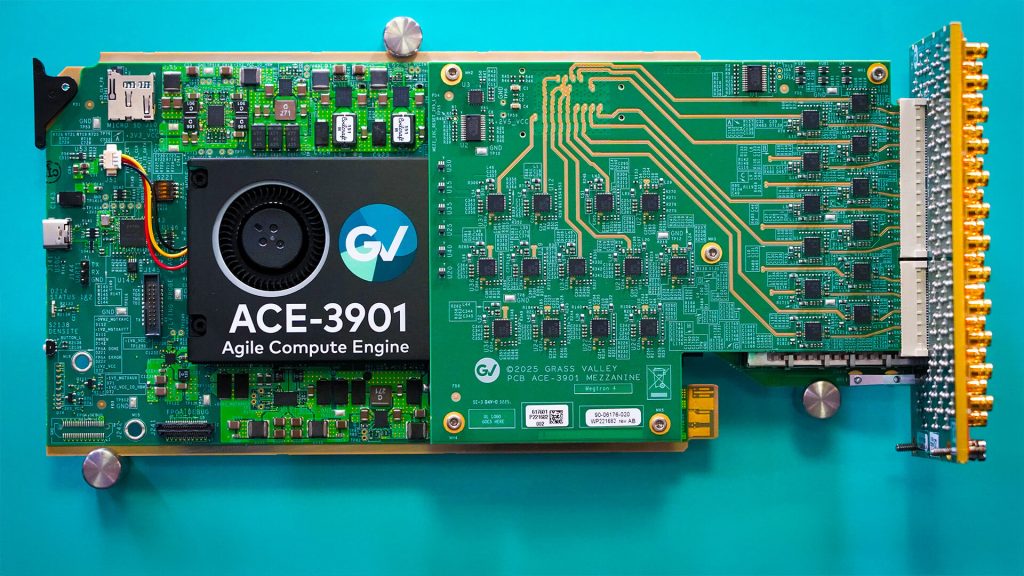
The shift to unified media operations is already becoming practical – Grass Valley’s ACE-3901-GRID is a clear example of why. It creates a bridge between existing SDI infrastructure and software-defined production workflows.
Because AMPP OS is MXL-native, ACE-3901-GRID does more than bring SDI signals into a software environment. It allows existing facility signals to become part of an MXL-native operational model, where media, context and workflow intelligence can be exchanged across the wider production environment.
That matters because many organizations have large, valuable SDI estates. Those signals serve real productions and connect cameras, routers, control rooms, galleries, studios and operational spaces that people depend on every day.
A unified media operation does not ask those environments to disappear before progress can begin, it allows them to participate.
With gateways such as ACE-3901-GRID, existing infrastructure can become part of a more dynamic production environment. Signals can be onboarded into software defined workflows. Facilities can extend into new production models. Organizations can begin adding DMF capabilities where they create value without treating the current operation as a problem to be solved.
That is the practical importance of integration without lift-and-replace: a media organization can start from its current operation, protect what already works and add new capabilities where they create value.
This is where Grass Valley’s role as a practical advisor becomes important. Grass Valley can support customers across that spectrum: dedicated hardware based workflows, AMPP OS-based software-defined workflows, Alliance Partner technologies and the many combinations in between. A unified media operation should not require every existing system, workflow or partner technology to carry the same logo.
That is what trusted advice should look like in this phase of the industry: the freedom to choose the right combination without being pushed toward one architectural answer.
In The End, It Is About The People
In the end, this transition is not only about systems, it is about the people who carry responsibility for an operation that cannot simply pause while the industry changes around it.
Behind every strategic decision are people trying to make the right call with real consequences. They are not choosing between old and new in the abstract, they are deciding how to stay relevant, protect continuity, support their teams and keep creating value while the industry changes around them.
Those concerns are not resistance to change. They are signs of operational responsibility.
Many media professionals already know this instinctively. Hardware has not suddenly become irrelevant. SDI still serves many workflows extremely well. Dedicated systems can still be the most efficient answer for functions that run continuously. But when the industry conversation becomes loud enough, people can start to wonder whether they have misunderstood the direction of travel.
A more unified strategy turns that doubt into clarity. What people have built does not have to be defended or discarded. The current operation is not proof that an organization is behind, it is often the reason progress can start with confidence.
The real challenge for leaders is not choosing between old and new, it is giving their teams an operation where the right ingredients work together in service of the audience, the creative ambition and the business.
What a Unified Operation Really Enables
So, what does a unified operation really enable? The simple answer would be integration. But a more unified operation is not about
creating more connections, it is about reducing the number of operational worlds people have to manage.
That distinction matters – connecting more things can easily create more complexity. The unified operation approach only becomes valuable when different resources contribute to one operational outcome.
Unified operation changes what integration means. Creative teams gain more ways to shape, package and deliver stories, while operations teams can introduce flexibility without losing the performance and familiarity certain workflows depend on. For business leaders, it creates a broader palette of choices, where the right workload can run in the right environment for the right reason.
It also changes the economics of capability. Dedicated hardware can be highly efficient when a function is used continuously. Software-defined capabilities can create a different kind of business agility because costs can be aligned more closely with actual use. A media organization can offer a production capability, validate the customer value and activate the required technology when that value is created rather than carrying every cost upfront.
In a more unified media operation, that flexibility matters. The operation can combine always-on efficiency with on-demand capability, allowing teams to shape the right technical and commercial model around the production rather than forcing every
opportunity through the same cost structure.
Most importantly, a more unified operation gives media organizations the freedom to make deliberate choices rather than inherited
compromises.
The strongest operation is not the one that follows the loudest trend. It is the one that understands its own reality clearly enough to combine the right ingredients with confidence.
The goal is not to make every operation look the same. It is to give every media organization the ability to build an operation that fits its own creative, operational and business ambition.
Closing Thought
As we have seen, the move toward more dynamic media operations is not a journey away from everything media organizations already have, it is a way to connect new possibilities to the value already inside the operation.
That is why the direction toward unified media operations matters.
DMF provides adaptability, MXL preserves freedom, trust enables participation, confidence creates readiness and AI strengthens agency. Those capabilities become most valuable when they connect to the systems, workflows, infrastructure, partners and people already delivering content every day.
The organizations that benefit most will not be those that replace the most, they will be the ones who understand what each part of their operation does best and bring those strengths together.
But connection is only the beginning. A more unified media operation is not created by linking technologies once. It is created when different resources can be understood, controlled and evolved as one operation every day.
That naturally raises the next question:
Once hardware, software-defined workflows, partner technologies and existing infrastructure can all become part of the same operation, how do people actually run that environment without feeling the complexity underneath?
That is the challenge we will explore in our last article.


